Blog >Destinations > Five Architectural Gems In The Middle East

04 Apr 2025 | By Vicky Chapman In Destinations

Five architectural gems in the Middle East

The Middle East is a melting pot of historic cultures and religions, each leaving its own mark in the architecture.
Buildings across the Middle East are rich in local heritage and religious culture, boasting elaborate designs and beautiful structures. From the modern styles of contemporary designers to the ancient designs featuring stained-glass windows, the Middle East is home to some of the world’s finest architecture.

Museum of Islamic Art, Qatar

With influences taken from ancient architecture, the Museum of Islamic Art is a perfect mix of traditional and contemporary style. Designed by world-renowned architect, I.M. Pei, the museum exudes his artistic combination of modernist and cubist themes.

The main building is set on an artificial peninsula, with limestone walls capturing year-round light and shade; highlighting the shapes and edges of the building. Geometric patterns feature in the entrance hall and the centrepiece of the room is a curved, double staircase which leads to the first floor, overlooked by an equally spectacular circular chandelier.

Burj Khalifa, Dubai

Since opening in 2010, the Burj Khalifa is the world’s tallest structure, measuring a sky-scraping 2,723 ft from ground level to the tip. The building features a triple-lobed footprint which design architect, Adrian Smith, says was inspired by the regional desert flower, Hymenocallis. The tower’s wings symbolise the protrusion of petals from a stem and creates a spiralling Y-shaped floorplan, supported by a central core. The floorplan maximises the hotels stunning views, with a spectacular panorama of the Arabian Gulf lying outside and natural light flooding the interior. The central core forms a spire as the cross-section of the building shrinks in size as it grows higher.

Dome on the Rock, Jerusalem

A sacred destination for all who visit Jerusalem, the Dome on the Rock is the oldest Islamic monument, built between 688 and 691 AD by the Umayyad caliph Abd al-Malik as a shrine for pilgrims. According to the Oxford Archaeological Guide to the Holy Land, Abd al-Malik wished to build a beautiful Muslim building which would be a symbolic statement to other faiths.

The defining feature of this building is the golden dome. Glistening on the Temple Mount of Jerusalem, the dome is made of copper and aluminium, and is covered in gold leaf. The interior of the golden dome features floral decorations in red and gold, as well as various inscriptions with the main one commemorating Saladin, a sponsor of extensive restoration work in the building.

Nasir ol Mulk Mosque, Iran

Kaleidoscopic colours are cast across the interior of Nasir ol Mulk Mosque as the morning sunshine rises over the side of the building. Often nicknamed ‘Mosque of Colours’ or ‘Rainbow Mosque’, it is rich in colour and Islamic heritage.

Built in the late 19th Century, the building’s architecture harks back to the tile-making and geometric patterns that flourished in the Golden Age of Islam – seen in the stained-glass windows, archways and floor tiles. The building took 12-years to complete and revealed a magnificent masterpiece of design and colour. It is also known as the ‘Pink Mosque’ for the rose-coloured tiles that cover the interior and shine through the windows.

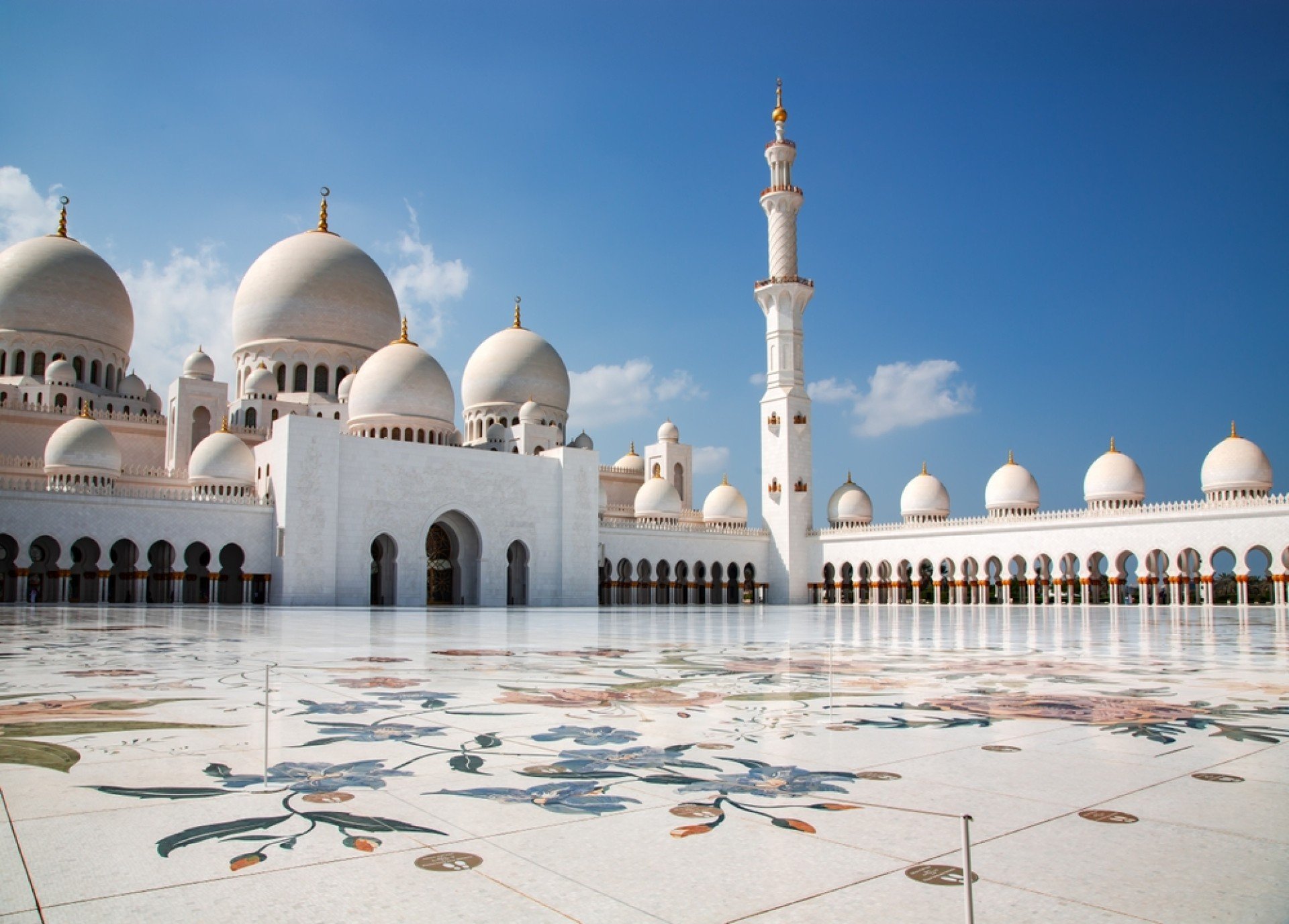
Sheikh Zayed Mosque, Abu Dhabi

An iconic feature of Abu Dhabi, the Sheikh Zayed Mosque is the lasting vision of the late Sheikh Zayed bin Sultan al Nahyan: the first president of the United Arab Emirates. Comprising marble pillars, Swarovski crystal chandeliers and the largest handmade carpet in the world, the building is an admirable homage to the craftsmanship of the region.

The interior of the mosque is finished with decadent decorations of Greek and Italian white marble, including 96 marble pillars in the main prayer hall which are inlaid with mother of pearl. Calligraphers from the UAE, Syria and Jordan supervised writings of verses from the Holy Quran, as well as illustrations of unique plants which were exclusively designed for the mosque. The carpet can be found in the main prayer hall, measuring over 5,625m² and hand-knotted by 1,300 Iranian craftsmen.

The landscape across the Middle East is dynamic and diverse, with crystalline décor and colourful carpets turning the regions architectural landmarks into must-see sights. Have you visited any of these architectural wonders? Let us know using the comment box, below.

Published 4th April 2025, Last updated 12th December 2025
By Vicky Chapman

Share this post


Our Award-Winning Service


Travel Weekly Large Cruise Agency of the Year 2023
Best Luxury Travel Agent 2022
UK Cruise Awards Winners 2023
Best Specialist Cruise Agent 2023
Best Use Of Content 2023
TTG Luxury Cruise Agency Of The Year
Best Workplaces in Travel 2024
You've added to your wishlist. To view, go to Wishlist

Request a Callback

Chat Service

Live Chat

Live Chat
Call for Free